
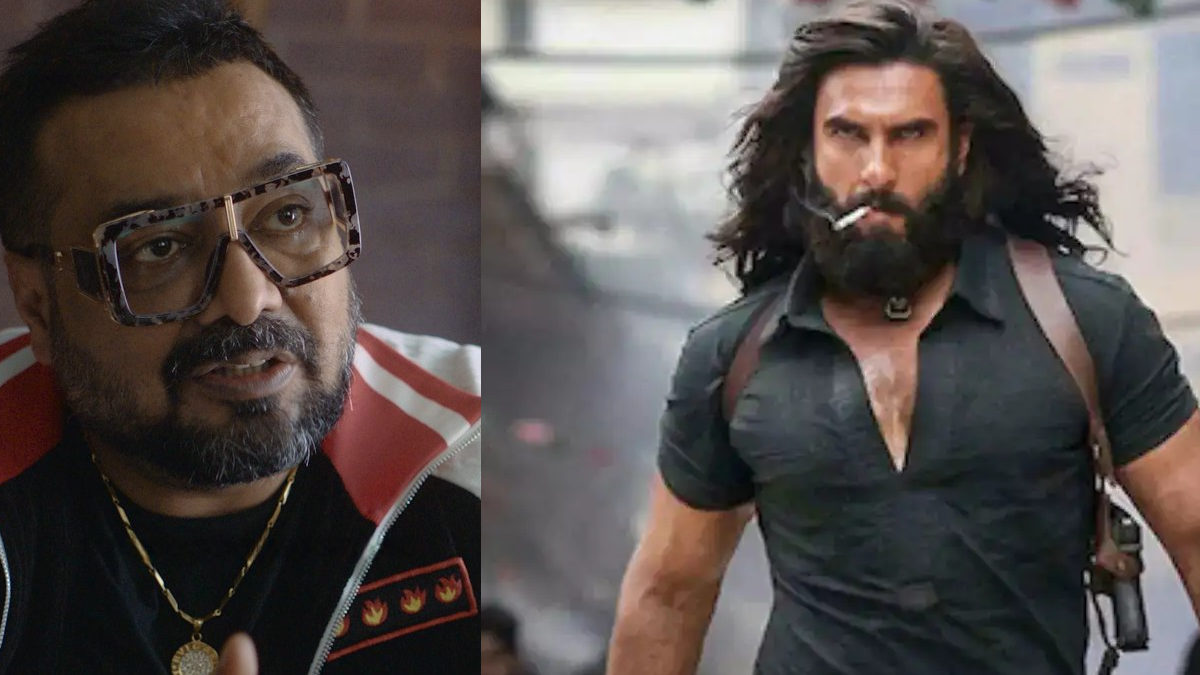
At a time when mainstream filmmakers often avoid overt political commentary, director Anurag Kashyap believes that taking risks is exactly what commercial cinema needs. Speaking at a recent public forum, Kashyap described Dhurandhar as a rare example of courage in today’s mainstream filmmaking—while also making it clear that he does not entirely agree with the film’s political messaging.
Kashyap was speaking at the Bengaluru International Film Festival, where he participated in a session titled Fearless Film Making. During the discussion, the filmmaker reflected on the shrinking space for political narratives in contemporary cinema and suggested that several politically charged films from earlier decades would find it difficult to be made in today’s environment.
Referring specifically to Dhurandhar, Kashyap praised the film’s ambition and scale but offered a nuanced critique of certain elements. “This is a good example of a courageous mainstream film,” he said. “I liked the film, but I didn’t like some of the ideologies. The dialogue about ‘This is the new India’ and one long political monologue—among a total of three scenes—were unnecessary. Even without them, the film’s impact would not have diminished.”
According to Kashyap, mainstream cinema often underestimates the intelligence of its audience by spelling out its political stance too explicitly. He argued that suggestion and storytelling are far more powerful tools than overt messaging, especially in large-scale commercial films.
Addressing the criticism surrounding Dhurandhar, Kashyap also spoke about the tendency to label politically themed films as propaganda or promotional content. He dismissed such arguments, stating that branding a film in this manner often reveals more about the critic than the film itself. “Calling a film propaganda is, in itself, a political act,” he said, adding that no film exists in a vacuum free from ideology.
Drawing a comparison with Hollywood, Kashyap pointed out the selective nature of such criticism. “Hollywood’s Marvel films propagate American supremacy, but no one criticises them from that perspective,” he remarked, highlighting how political messaging is often normalised when it aligns with dominant global narratives.
Directed by Aditya Dhar, Dhurandhar stars Ranveer Singh in the lead role, alongside an ensemble cast that includes Akshaye Khanna, R. Madhavan, Sanjay Dutt, and Arjun Rampal. The film has emerged as a global box office juggernaut, grossing over ₹1300 crore worldwide and generating widespread conversation across audiences, critics, and political commentators alike.
Beyond its theatrical success, Dhurandhar is now making moves in the satellite and broadcast space. According to a report by Mid-Day, the makers have initiated discussions with satellite channels and broadcasters to sell the television rights for Parts 1 and 2 as a single bundled package. The strategy is aimed at maximising the franchise’s value by positioning it as a unified cinematic experience rather than standalone installments.
A source close to the development revealed that while the first part is expected to begin airing on television from March 31, the second installment—scheduled to hit theatres on March 19—will arrive on TV screens only after a gap of 117 days, roughly four months post its theatrical release. The team is currently finalising worldwide transmission deals, with the exception of China, Taiwan, and Macau.
As Dhurandhar continues to dominate conversations both on and off screen, Kashyap’s comments have reignited debate around political courage, creative freedom, and the evolving boundaries of mainstream Indian cinema.