

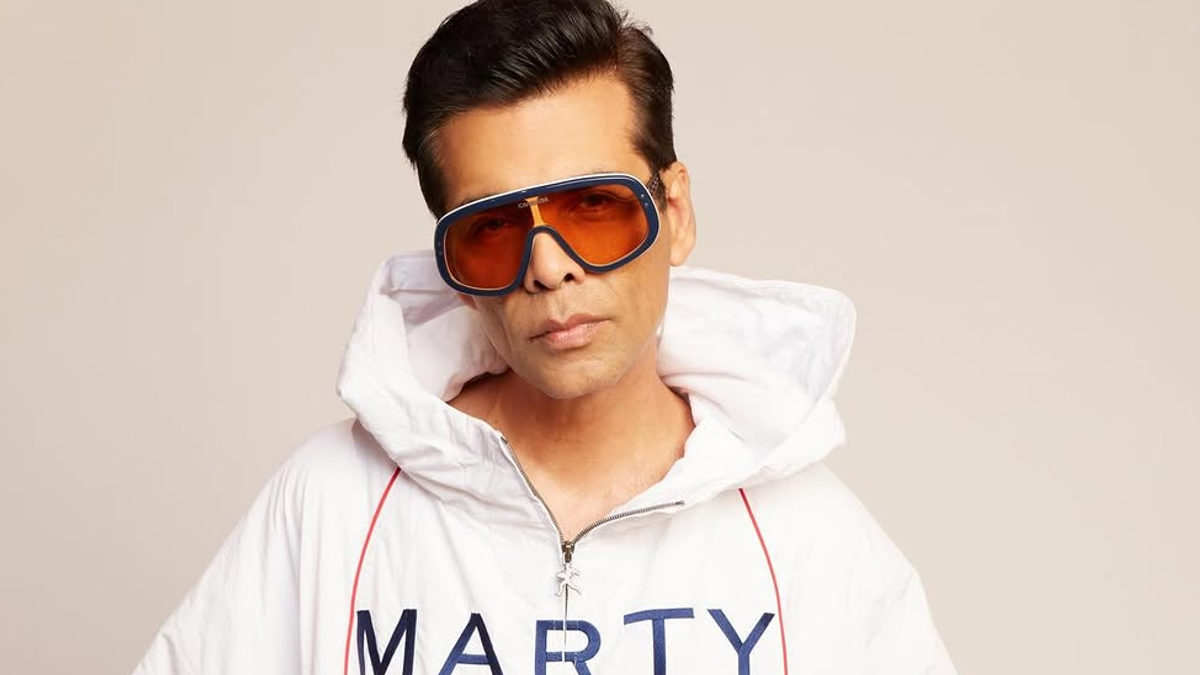
More than just a filmmaker, Karan Johar has long been one of Hindi cinema’s most influential cultural architects. His films have not only entertained audiences but have consistently shaped how India dresses, celebrates love, and even conducts weddings. From runway-worthy costumes to lavish song-and-dance sequences that redefined matrimonial traditions, Johar’s cinematic universe has left a lasting imprint on Indian pop culture.
In a recent interview with The Hollywood Reporter India, the filmmaker reflected on Bollywood’s deep-rooted influence on fashion and social customs, particularly wedding culture. According to Johar, cinema has always been a powerful force in shaping public taste—one that transcends generations.
“Has it been an impressionable force of nature? Yes,” Johar said. “There have been generations who are wearing clothes that they get from cinema, and this has happened from time immemorial. Has it impacted pop culture? Of course it has.”
Tracing the origins of cinematic style, Johar pointed to the 1960s as a defining era for fashion in Indian films. He described the period as one of unmatched elegance, marked by timeless silhouettes and refined aesthetics. “I believe the ’60s were the most stylish part of cinema,” he noted, praising the immaculate saris and sharply tailored suits that still feel relevant today.
As an example, Johar referenced the opening credit song from Yash Chopra’s Aadmi Aur Insaan (1970). In the sequence, Mumtaz dances in a chic black, knee-length dress, flanked by Feroz Khan and Dharmendra in tuxedos—an ensemble Johar believes wouldn’t look out of place even now. “The late ’60s is the most stylish, fashionable clothing that you will see,” he said, calling it a golden era of cinematic fashion.
Not every decade fared as well, however. Johar was candid about the 1980s, calling the period “jarring” and lacking aesthetic coherence. “We learned nothing,” he admitted bluntly. But the tide began to turn toward the late ’80s and early ’90s, with films like Maine Pyar Kiya (1989) and Hum Aapke Hain Koun..! (1994) ushering in a softer, romantic fashion sensibility.
Johar recalled how Bhagyashree’s pink rose outfit from the song “Kabootar Ja Ja Ja” sparked a nationwide trend, while Madhuri Dixit’s purple sari in Hum Aapke Hain Koun..! became instantly iconic. These looks weren’t just costumes—they became aspirational templates for an entire generation.
A major shift came with designer Manish Malhotra’s work in Rangeela (1995), which Johar credits with redefining ’90s Bollywood fashion. “That film changed the tide and brought wearable fashion to cinema,” he said. The collaboration laid the groundwork for a style evolution that carried through films like Dilwale Dulhania Le Jayenge, Dil To Pagal Hai, Kuch Kuch Hota Hai, and beyond.
Even decades later, the impact remains undeniable. Johar revealed that Malhotra is still asked to recreate Kareena Kapoor’s “Bole Chudiyan” outfit from Kabhi Khushi Kabhie Gham and the lehenga from “Maahi Ve” in Kal Ho Naa Ho. He also credited cinema for popularizing styling trends like wearing a dupatta draped around the neck.
Perhaps Johar’s most far-reaching influence, however, lies in wedding culture—particularly the sangeet ceremony. “I think sangeet happened because of cinema,” he said. When jokingly told he was to blame for the trend, Johar accepted it with pride. “I’m happy to take that blame. It’s between Soorajji, Adi, and me that we brought in this culture where every community now has a sangeet. It used to be specific to the Punjabi community.”
For Johar, cinema has never just mirrored society—it has shaped how India dreams, dresses, and dances.