

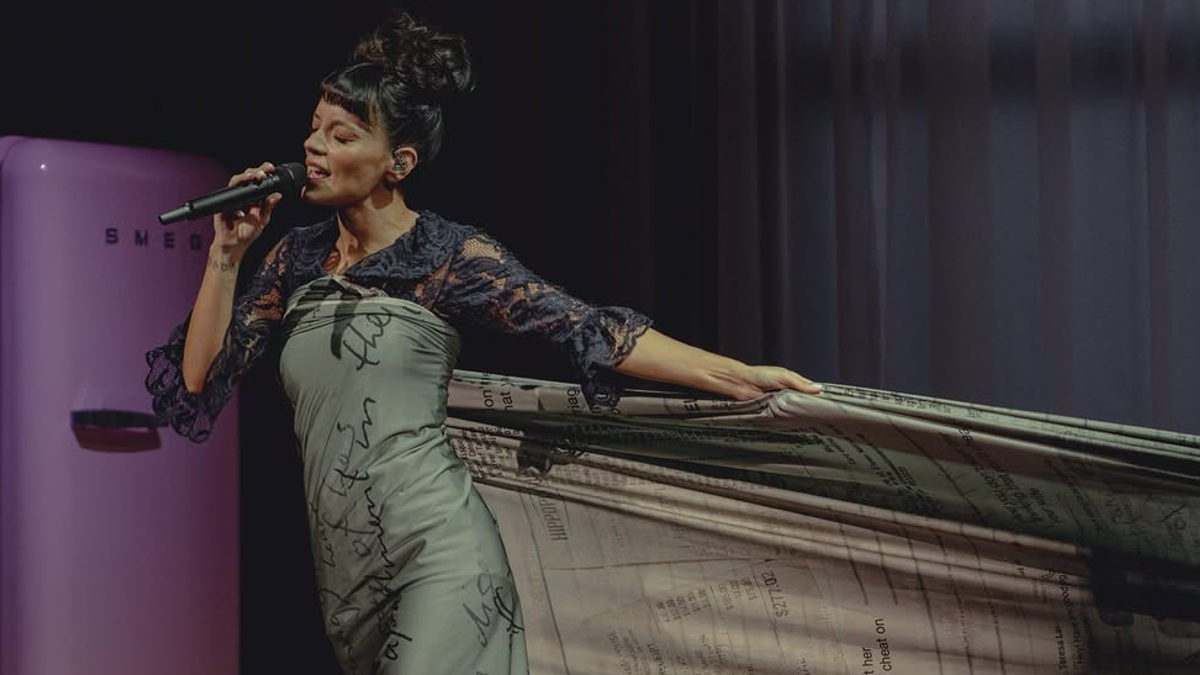
Lily Allen is turning personal heartbreak into a bold artistic statement. As she tours in support of her 2025 album, the 40-year-old singer is channeling emotional upheaval into a theatrical live experience that has sparked widespread conversation online. Allen recently launched her West End Girl Tour, performing her latest album in full for audiences eager to see how her new music translates on stage. The record explores themes of fame, feminism, betrayal and self-reclamation, but many fans believe its emotional backbone is tied to her split from estranged husband David Harbour.
Though Allen has not publicly confirmed specific inspirations behind each track, listeners have drawn their own conclusions — especially after one striking performance moment quickly went viral.
The tour is as much a visual narrative as it is a musical one. Allen uses wardrobe changes to reflect the shifting tone of her songs. For upbeat, high-energy tracks, she steps out in a tailored pink tweed suit, projecting polish and poise. During darker, sharper numbers, she opts for a black leather dress that underscores the album’s more confrontational edge. When the mood softens for introspective ballads, she appears in a sheer robe, creating a sense of vulnerability while maintaining her commanding stage presence.
However, it is her performance of “4Chan Stan” that has captured the internet’s attention.
Midway through the song, Allen wraps herself in a long piece of olive-green fabric covered with handwritten lyrics and printed receipts. From afar, the ensemble resembles avant-garde couture. Up close, the details reveal a far more pointed message. According to reports from Page Six, the receipts printed on the fabric included purchases from tequila bars and the luxury department store Bergdorf Goodman.
Fans quickly connected the dots between the receipts and the song’s lyrics, which describe discovering a partner’s financial betrayal — including lavish spending on another woman, such as expensive handbags and nights out. By incorporating these symbolic details into her costume, Allen appeared to be transforming alleged personal grievances into wearable art.
The moment spread rapidly across social media, particularly on X, where users debated the intent and impact of the gesture. Some critics dismissed the performance as excessive. “Girl we get it, he cheated on you, move on,” one user wrote. Others pushed back, defending the creative decision. “Everyone saying ‘move on’ but it’s literally the theme of the album she’s touring rn…” another commenter noted, pointing out that artists often draw from personal experience to shape their work.
Lily Allen wore a dress at her ‘West End Girl’ tour made of receipts showing things her ex David Harbour bought for other women. pic.twitter.com/RrUjOoXHGA
— Pop Crave (@PopCrave) March 4, 2026
Many praised the boldness of the staging. One viral post described it as “the level of pettiness we should all aspire to,” while another dubbed it the “ultimate revenge dress.” The phrase reflects a long-standing pop culture tradition in which fashion becomes a statement of empowerment following public heartbreak. Allen’s interpretation feels distinctly modern — hyper-specific, self-aware and unapologetically theatrical.
Beyond the viral costume, the West End Girl Tour has been lauded for its emotional transparency. Allen frequently intersperses songs with candid remarks, offering insight into the creative process and the feelings that shaped the album. Her commentary ranges from wry humor to biting honesty, reinforcing the sense that the show is not merely a concert but a confessional performance piece.
The staging itself remains relatively minimal, ensuring that the focus stays on the lyrics and storytelling. Rather than elaborate set changes, Allen relies on mood lighting, costume shifts and her own presence to carry the narrative arc of the evening.
Whether viewed as catharsis, confrontation or calculated showmanship, the receipt-covered outfit has undeniably amplified the tour’s visibility. In a cultural moment where celebrity breakups often unfold through cryptic social posts and carefully managed statements, Allen has chosen a more direct — and dramatically artistic — approach.
For Lily Allen, heartbreak is not something to quietly retreat from. Instead, she steps into the spotlight, weaving pain into performance and reclaiming the narrative on her own terms — receipts and all.