

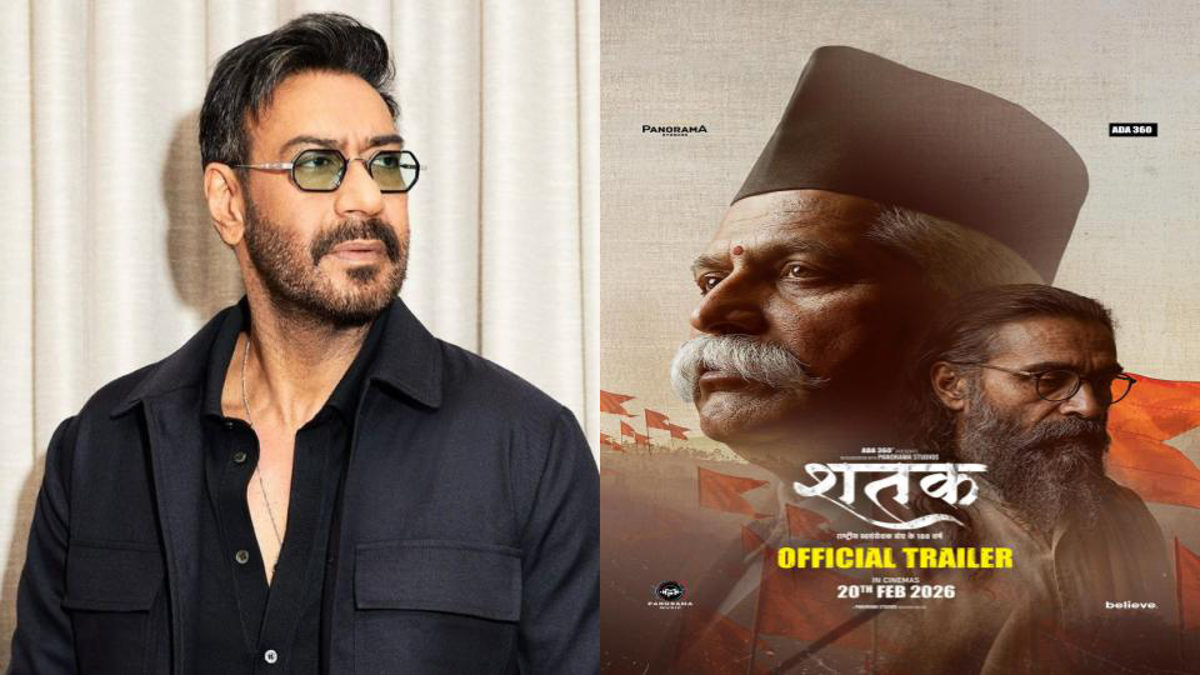
Director Aashish Mall’s Shatak attempts to compress a century of the Rashtriya Swayamsevak Sangh into a 112-minute cinematic experience. Positioned as a centenary tribute, the film blends elements of feature storytelling with documentary-style narration.
It traces the organisation’s journey from its founding by Keshav Baliram Hedgewar to its expansion under Madhav Sadashivrao Golwalkar, while also addressing criticisms and presenting counter-perspectives. Rather than simply recounting history, the film engages with debates surrounding the RSS’s role in India’s socio-political evolution.
Visually, Shatak leans heavily on CGI and recreated sequences to depict historical moments. While this enables scale, it sometimes creates emotional distance, making the experience feel more illustrative than immersive.
The film prioritises information over emotional storytelling, moving swiftly through milestones without fully developing human drama. As a result, it feels closer to a commemorative docufeature than a conventional cinematic narrative.
Given the vast scope of its subject, the film hints at a continuation, suggesting that its story may unfold further in a future installment. Ultimately, Shatak raises an interesting question: when portraying history on such a scale, should cinema aim only to inform — or also to make us feel?